
Compression-molded PTFE
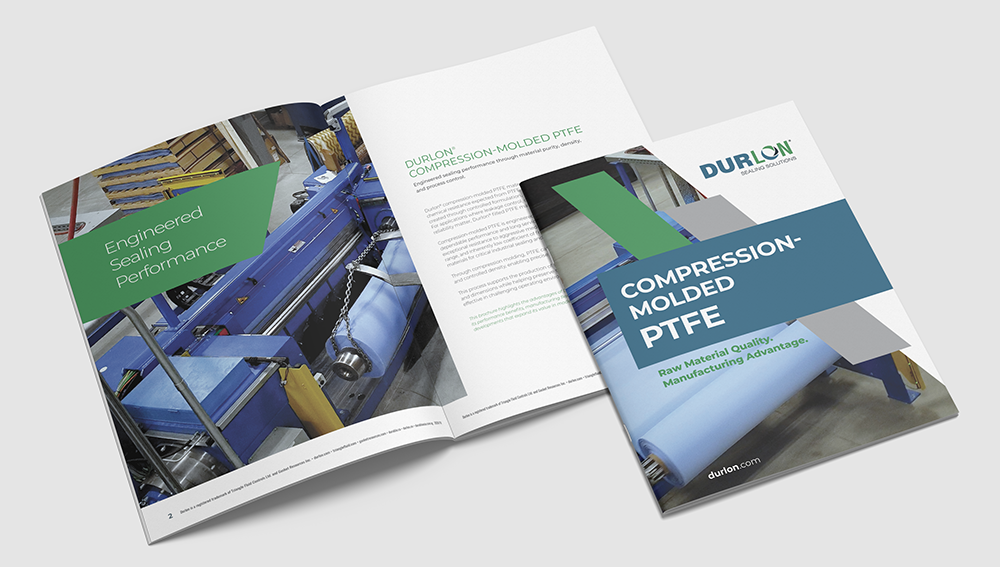
Durlon® compression-molded PTFE materials combine high-quality raw materials, controlled manufacturing processes, and precision skiving to deliver dependable sealing performance in demanding industrial applications.
Engineered for applications where chemical compatibility, leakage control, and long-term reliability are critical, Durlon® filled PTFE gasket materials are engineered to provide consistent density, dimensional stability, and resistance to aggressive process media.
Explore Our PTFE Products | Download the Brochure
Engineered for Demanding Sealing Environments
Polytetrafluoroethylene (PTFE) is widely recognized for its exceptional chemical resistance, broad temperature capability, low coefficient of friction, and long-term durability. These characteristics make it a preferred material for industrial sealing applications where conventional materials may degrade, react, or lose performance.
Unlike many thermoplastics, PTFE cannot be processed using conventional melt-flow methods due to its extremely high melt viscosity. Instead, it is typically formed through compression molding followed by controlled sintering.
Consequently, the manufacturing process is a critical factor in determining the consistency and performance of the finished gasket material.
From PTFE Powder to Precision Gasket Sheet Material
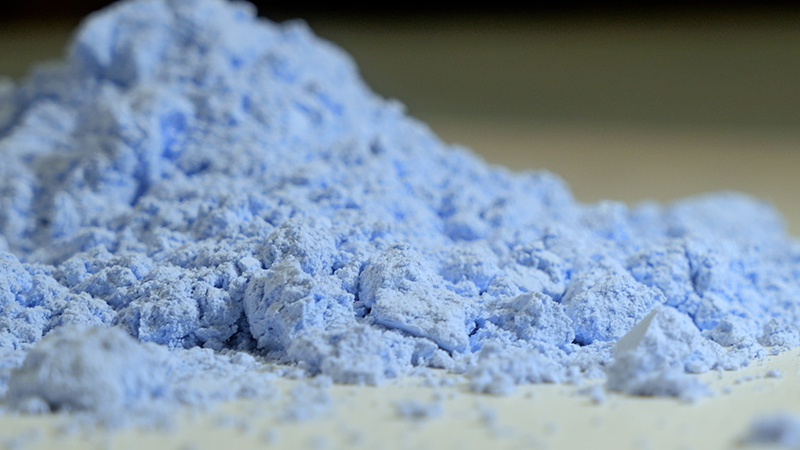
Compression molding is a specialized manufacturing process that converts PTFE powder into cylindrical billets used to produce industrial gasket sheets. Through controlled material preparation, compaction, sintering, and cooling, PTFE is formed into a cohesive structure with consistent density and dimensional characteristics.
The Manufacturing Process
-
Raw Material Preparation
Selected PTFE resins and engineered fillers are carefully prepared to support the required material formulation and finished gasket characteristics. -
Compression Molding
The prepared material is loaded into a mold and subjected to controlled pressure, compacting the material into a cylindrical preform, commonly referred to as a green billet. -
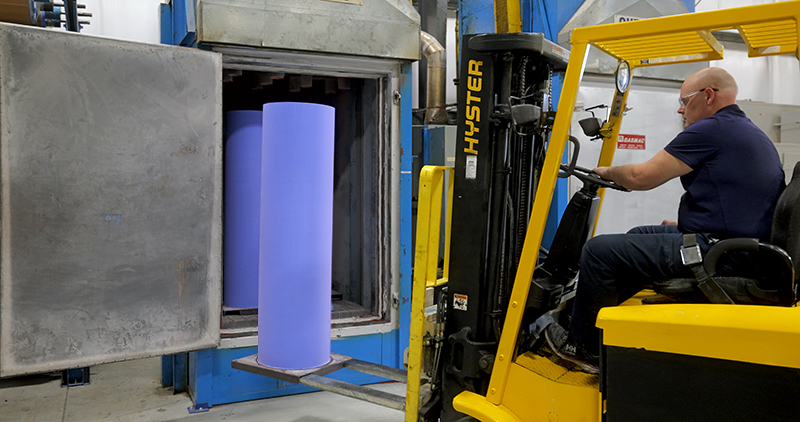
Controlled Sintering
The compacted billet is heated above the PTFE gel point, allowing the particles to fuse into a cohesive material structure. -
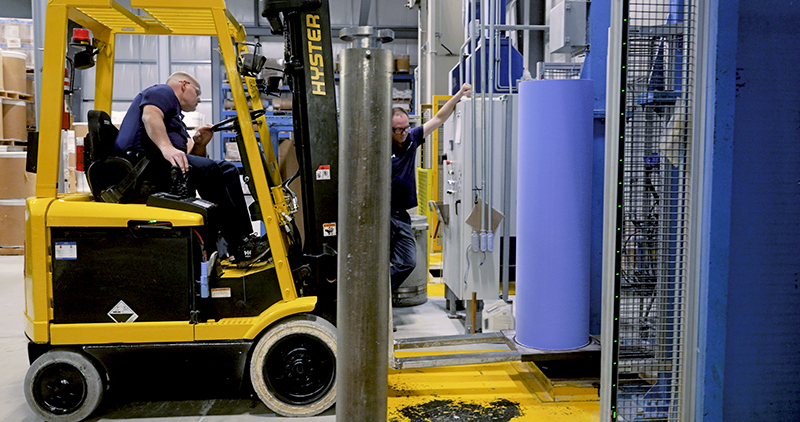
Controlled Cooling
The sintered material undergoes controlled cooling to help manage shrinkage, internal stresses, and dimensional stability. -
Precision Skiving
Sintered billets are skived into continuous PTFE sheets using precision manufacturing equipment. This process supports consistent sheet thickness and efficient material utilization during subsequent gasket production.
Precision Manufacturing for Consistent Gasket Performance and Improved Material Yield
In demanding industrial applications, chemical resistance alone does not determine gasket suitability. Gasket materials must also compress predictably, conform to flange surfaces, resist creep, and maintain sufficient gasket stress throughout service.
Following compression molding and sintering, Durlon® PTFE billets are processed using precision-skiving equipment to produce continuous gasket sheets. This process supports controlled sheet thickness, consistent material properties, and greater production flexibility compared with conventional fixed sheet formats.
Sheet Thickness Tolerances:
| Sheet Thickness | Tolerance |
|---|---|
| Up to 1/64 in. (0.40 mm) | ±5% |
| 1/64–1/16 in. (0.40–1.59 mm) | ±4% |
| 1/16–1/8 in. (1.59–3.18 mm) | ±3% |
| 1/8 in.–8 mm (3.18–8.00 mm) | ±2% |
Improving Gasket Yield
Continuous skived PTFE rolls provide greater flexibility for optimizing gasket nesting during flash-cutting operations, reducing edge trim and improving material utilization compared with conventional sheet formats. Based on internal manufacturing estimates, optimized nesting strategies can improve material yield by approximately 11–17%, depending on gasket geometry, sheet dimensions, and cutting layout.
Find the Right PTFE Material for Your Application
Durlon’s compression-molded PTFE product family includes specialized formulations developed to address demanding chemical, thermal, and process requirements.

Durlon® 9000 | High-Performance Filled PTFE
Blue, inorganic-filled PTFE engineered for aggressive chemical environments, low-leakage sealing, and improved dimensional stability compared with virgin PTFE.
Typical applications:
Chemical processing, process piping, pulp and paper, oil and gas, power generation, and rail tank car service.

Durlon® 9000N | Unpigmented High-Purity Filled PTFE
A white, unpigmented formulation combining pure PTFE resins with engineered inorganic fillers. Developed for demanding applications where material color, cleanliness, or contamination control is important.
Typical applications:
Pharmaceutical processing, food and beverage, bioprocessing, chemical processing, and high-purity service.

Durlon® 9002 | PTFE for Oxygen and Cryogenic Service
An inorganic-filled PTFE gasket material developed for demanding oxygen and cryogenic systems, including industrial gas production, LNG, and chemical processing. The material is supported by BAM testing for gaseous and liquid oxygen service and LOX mechanical-impact testing.
Typical applications:
Industrial gas production, oxygen handling systems, cryogenic processing, LNG facilities, and chemical processing.
Important: Finished gaskets intended for oxygen service require appropriate oxygen cleaning and packaging. Oxygen-cleaned gaskets are available upon request.

Durlon® 9400 | Carbon-Filled PTFE for HF and AHF Service
Black, carbon-filled PTFE engineered for highly aggressive chemical service, particularly hydrofluoric acid (HF) and anhydrous hydrogen fluoride (AHF). Its formulation provides improved resistance to cold flow compared with virgin PTFE and offers electrical conductivity for applications where this property is required.
Typical applications:
HF/AHF handling systems, chemical processing, acid production and transfer, and AHF rail tank cars.
FAQs
Compression-molded PTFE
Compression-molded PTFE is produced by compacting PTFE powder under controlled pressure to form a billet, followed by sintering and controlled cooling. The finished billet can then be skived into continuous gasket sheets.
A well-controlled compression-molding process supports material uniformity, consistent density, predictable gasket compression, and precision sheet production. Performance depends on both formulation and manufacturing conditions.
Virgin PTFE provides excellent chemical resistance but is susceptible to creep and cold flow under sustained loading. Engineered filled PTFE materials incorporate selected fillers to improve properties such as dimensional stability and creep resistance while retaining chemical resistance appropriate to the formulation.
Density can provide useful insight into the formulation and structure of a gasket material. However, density alone does not determine sealing performance. Creep resistance, compressibility, recovery, and leakage characteristics should also be evaluated.
Following molding, sintering, and cooling, cylindrical PTFE billets are skived into continuous sheets. These sheets can then be processed into finished gasket profiles.
Certain compression-molded PTFE formulations, including Durlon® 9002, have been specifically developed and tested for oxygen service. Finished gaskets intended for oxygen applications require appropriate cleaning and packaging before use.
Discover how Durlon’s controlled formulation, precision manufacturing, and application-focused testing support dependable sealing performance across demanding industrial environments.
Access the technical information you need to evaluate the appropriate PTFE gasket material for your application.
Explore Our PTFE Products | Download the Brochure | Contact a Sealing Specialist