Low Seating Stress Gaskets
Durlon® low seating stress gaskets are engineered to provide reliable seals at lower bolt loads, making them the right choice for fragile flange and equipment designs where excessive clamping force can cause damage. Available in a range of gasket material types, each product in this category maintains operational integrity without placing unnecessary stress on the flange assembly.
Need High-Performance Sealing Solutions?
Request A Quote | View Durlon Gasket Manual
What Are Low Seating Stress Gaskets?
Low seating stress gaskets are sealing components designed to achieve an effective seal at significantly lower bolt loads than standard gaskets. This is critical in applications where the flange, equipment casing, or connecting material is fragile, lightweight, or prone to deformation under high clamping force. By reducing the seating stress required, these gaskets protect both the flange face and the sealing surface while maintaining leak-free performance.
How low seating stress gaskets are designed:
• The contact area between the gasket and flange face is reduced or profiled to concentrate the sealing load.
• Materials are selected for high compressibility and conformability at lower bolt torque.
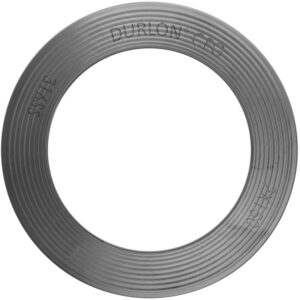
• Corrugated or reduced-contact profiles (CFG, RCA) allow tight sealing without full-face bolt load.
Fabrication and Installation
• Low-seating stress gasket sheets are available for cut-to-size fabrication to match specific flange dimensions.
• Installation requirements depend on the gasket type, flange design, and recommended bolt-load specifications.
Key Benefits of Low Seating Stress Gaskets
• Effective sealing at lower bolt loads, reducing installation time and risk.
• Protects fragile or composite flange materials from deformation and cracking.
• Broad low-seating stress gasket material options, including EPDM, Viton®, and corrugated metal.
• Reliable sealing performance across a range of operating conditions, depending on gasket material and construction.
• Compatible with lightweight and non-metallic flange assemblies.
Low Seating Stress Gaskets Material For Demanding Applications
Durlon® low seating stress gaskets are available in elastomeric, PTFE-composite, and corrugated flexible graphite constructions. The right choice depends on chemical compatibility, operating temperature and pressure, flange material, and the seating load the joint can accommodate.
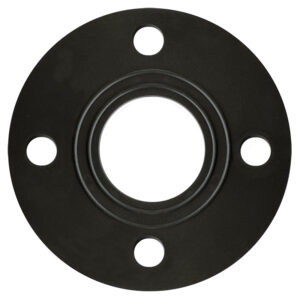
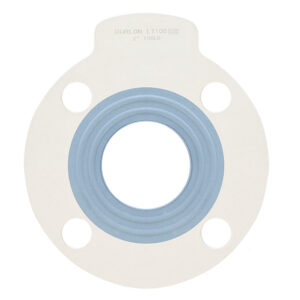
• LT100 - PTFE bonded to EPDM: Combines expanded PTFE (ePTFE) with a peroxide-cured EPDM base and a protective PTFE shield. Its dual-rib design supports low-load sealing in plastic, FRP, glass-lined, and other suitable flange systems where chemical resistance is important.
• LT200 - 100% Genuine Viton®: Uses pure Genuine Viton® (FKM) for applications requiring resistance to selected chemicals, fuels, hydrocarbons, and steam. Its moulded double-rib construction supports sealing on flat-face and raised-face flanges.
• LT300 - 100% pure EPDM: Uses peroxide-cured EPDM in a moulded, double-rib construction. It is suited to compatible water, steam, and other specified industrial services where low seating stress is a priority.
• CFG - Corrugated Flexible Graphite: Combines flexible graphite layers bonded to a corrugated 316 stainless steel core. The corrugations provide recovery and sealing characteristics for demanding thermal and pressure conditions.
• RCA® - Reduced Contact Area: A gasket configuration that reduces the area in contact with the flange, lowering the seating stress required at a given torque. It is available with specified Durlon® PTFE and compressed non-asbestos (CNA) sheet materials.
These products use different constructions and are not interchangeable. Confirm the material's chemical compatibility, temperature and pressure limits, flange requirements, and installation parameters before specifying a gasket. Review the relevant Durlon Product Technical Sheets and consult Durlon's technical team when application conditions require further evaluation.
Industries and Applications for Low Seating Stress Gaskets
• Chemical processing — flanged connections in fragile or lined piping systems.
• Power generation — low-pressure steam and condensate services.
• Pharmaceutical and food & beverage — lightweight equipment flanges.
• OEM applications requiring low seating stress gasket sheets cut to custom dimensions.
• General industrial applications with glass-lined, FRP, or composite flange materials.
Low Seating Stress Gaskets FAQs
How Much Bolt Load Do Low Seating Stress Gaskets Need?
The required bolt load depends on the gasket material, thickness, flange design, and operating pressure. Low seating stress gaskets seat at a lower load than standard sheet or spiral wound products. Check the seating stress values on the relevant Product Data Sheet and keep the load within the flange manufacturer's limit.
How Do You Choose Between Low Seating Stress Gaskets and a Spiral Wound Gasket?
Base the choice on flange strength and operating conditions. Spiral wound gaskets generally require sufficient compressive load to achieve an effective seal. In applications involving fragile, non-metallic, or composite flanges, the required seating load may exceed the flange's allowable limits. Durlon® CFG and RCA® offer alternative sealing solutions for applications with bolt-load limitations.
What Causes a Flange to Crack When a Gasket Is Tightened?
Cracking usually comes from bolt load above the flange rating, uneven tightening, or a gasket that needs more seating stress than the flange can take. Brittle flange materials are most at risk. A gasket that seats at a lower load reduces that stress.
How Do You Tighten Bolts on a Low Seating Stress Gasket?
Tighten bolts in a cross pattern and in stages, up to the torque specified for the gasket and flange. Never exceed the flange manufacturer's torque limit. Check the product data sheet for the recommended value for your gasket.
Which Low Seating Stress Gasket Material Suits Chemical Service?
Material choice depends on the media, temperature, and pressure. EPDM suits steam, water, and many acids and alkalis, while Viton® suits oils, fuels, and many aggressive chemicals. Check the chemical compatibility details in the Product Data Sheets and confirm the choice with Durlon engineers.
What Details Are Needed to Order Low Seating Stress Gasket Sheets?
Provide the flange type and size, inner and outer diameters, bolt hole count and size, media, operating pressure and temperature, and the flange material. With these details, Durlon® offers different gasket constructions, including molded and fabricated options. The engineering team can recommend an appropriate product and confirm available sizes or custom fabrication options.
Trust Durlon® for low seating stress gaskets engineered to protect fragile flanges and maintain long-term sealing reliability. Our engineering team is ready to assist with material selection, custom fabrication, and technical support for your application. With over four decades of sealing expertise, Durlon® is your partner for critical sealing solutions.
Contact us today to find the right low seating stress gaskets for your application and ensure a secure, long-lasting seal.