
Durlon Chemical Resistance Charts
Find the Right Gasket Material for Your Chemical Service
Selecting the right gasket material is critical when sealing chemicals, fluids, gases, fuels, acids, solvents, steam, and other industrial media. The Durlon Chemical Resistance Chart provides a quick-reference guide to help identify suitable non-metallic gasket materials based on chemical compatibility.
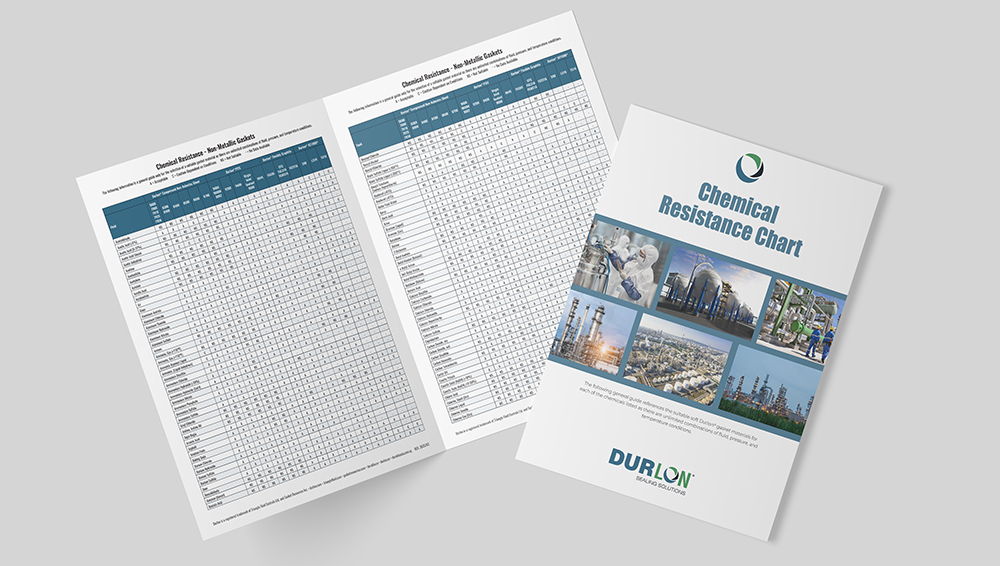
This chart is designed as a general selection guide for Durlon® gasket materials across a wide range of service media. Because real-world performance depends on the full application environment, including fluid concentration, pressure, temperature, and operating conditions, the chart should be used as a starting point for material selection.
Understanding Chemical Resistance
Chemical resistance refers to a gasket material’s ability to maintain sealing performance when exposed to a specific chemical or process fluid. A chemically compatible gasket helps reduce the risk of material degradation, leakage, swelling, cracking, contamination, and premature gasket failure.
In the Durlon chart, each fluid is matched against multiple gasket material families and rated for general compatibility:
A — Acceptable: Generally suitable for the listed chemical service.
C — Caution: Dependent on Conditions: May be suitable depending on concentration, temperature, pressure, or other application details.
NS — Not Suitable: Not recommended for the listed chemical service.
– — No Data Available: Compatibility information is not available.
Gasket Materials Featured in the Charts
The Durlon Chemical Resistance Chart includes compatibility guidance for major non-metallic gasket categories, including:
Durlon® Compressed Non-Asbestos Sheet
A practical sealing option for many general industrial services, including water, oils, steam, mild chemicals, and utility applications.
Durlon® PTFE
A strong choice for many aggressive chemical applications, including acids, solvents, and corrosive media where broad chemical resistance is required.
Durlon® Flexible Graphite
Often used in high-temperature applications and demanding industrial services where thermal stability and sealing performance are important.
Durlon® HT1000®
Designed for elevated-temperature sealing applications where conventional gasket materials may not be suitable.
Why Use the Durlon Chemical Resistance Chart?
Use the chart to quickly compare gasket materials for common industrial media, including:
Acids, caustics, fuels, oils, refrigerants, solvents, steam, water, gases, food-related fluids, and chemical process streams.
The chart helps maintenance teams, engineers, buyers, and plant personnel narrow down gasket material options before final review.
Important Application Note
Chemical compatibility charts are general guides only. Final gasket selection should consider the complete application, including chemical concentration, pressure, temperature, flange condition, cycling, media purity, and applicable safety requirements. For unusual or critical service conditions, consult technical support before selecting a gasket material.
Download the Durlon Chemical Resistance Chart
Download the full Durlon Chemical Resistance Chart PDF for detailed compatibility ratings across listed chemicals and gasket materials.
Need Help Selecting a Gasket Material?
Not sure which Durlon gasket material is right for your application? Contact our team for assistance with chemical compatibility, operating conditions, and gasket material selection.