
Access our detailed steam application literature to explore steam conditions, sealing challenges, gasket material performance, and product recommendations for industrial steam service. Download the Steam Applications Sealing Solutions Guide now for comprehensive technical insights.
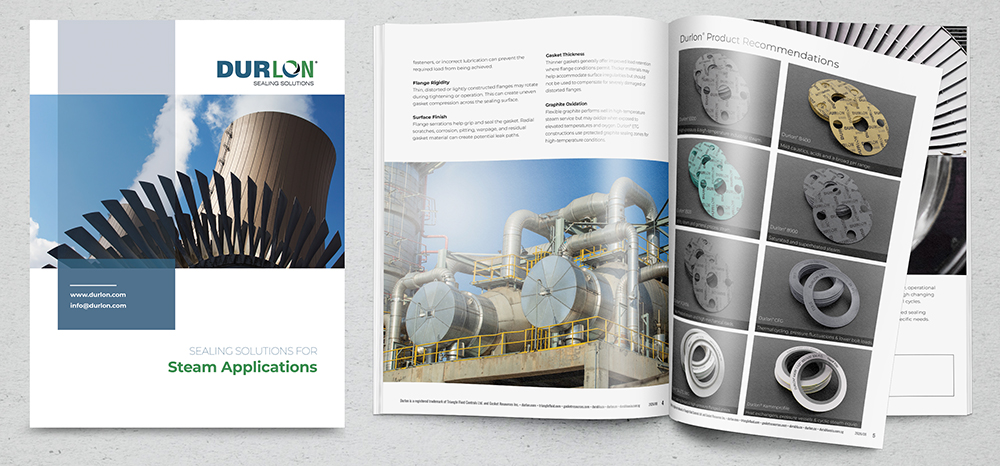
Reliable Sealing for Demanding Steam Systems
Steam is used throughout industrial operations to generate power, transfer heat, sterilize equipment, and support critical manufacturing processes. It is found across power generation, chemical processing, refining, pulp and paper, food and beverage, pharmaceutical production, primary metals, and general manufacturing.
Although steam is widely used, it can be challenging to seal reliably. Elevated temperatures, internal pressure, and repeated thermal cycling place significant demands on gaskets, bolting, and flange assemblies. During startup, shutdown, and changes in operating load, joint components can expand and contract at different rates, redistributing bolt load, affecting flange alignment, and creating potential leak paths.
Steam can also transition between vapour and liquid as it moves through a system. Condensate may form inside piping, valves, heat exchangers, and process equipment, creating rapid temperature changes and mixed liquid-vapour conditions.
At Durlon®, we understand that reliable steam sealing requires more than choosing a gasket based on maximum temperature. Steam condition, pressure, thermal cycling, flange design, available bolt load, gasket construction, surface finish, and installation practices must all be evaluated together.
Understanding Steam Conditions
Different steam conditions create different demands on a gasketed joint. Identifying the type of steam service is an important first step when selecting a sealing solution.
Saturated Steam
Saturated steam is produced when water boils at the temperature associated with the system pressure. It is widely used for process heating, heat transfer, and general utility applications. As the steam releases heat, it condenses back into water.
Superheated Steam
Superheated steam is heated above the saturation temperature for its operating pressure. It is commonly found in turbines, power generation, boilers, and severe process applications.
The higher temperatures associated with superheated steam increase the importance of material stability, oxidation resistance, and retained gasket stress.
Wet Steam
Wet steam contains suspended water droplets or condensate. These mixed-phase conditions can produce rapid temperature changes, erosion, and fluctuating loads at valves, traps, and piping connections.
Utility Steam
Utility steam is distributed throughout a facility for general heating, cleaning, and process use. Operating conditions can change as pressure is reduced and steam is routed to different equipment.
Clean Steam & Steam-in-Place
Clean steam and Steam-in-Place systems are commonly used in pharmaceutical, biotechnology, food-processing, and other hygienic applications.
Gasket selection should account for material purity, cleanability, applicable regulatory requirements, and repeated sterilization cycles.
Condensate Return
After steam transfers its heat, it returns to liquid form. Condensate piping, flash tanks, steam traps, pumps, and return systems can remain hot while experiencing flashing, pressure changes, and repeated thermal cycling.
How Steam Affects Gasketed Joints
A gasket must create and maintain a seal while temperature, pressure, and equipment conditions change throughout operation. Several factors directly influence joint reliability.
Temperature & Pressure
As system pressure increases, the force attempting to separate the flanges also increases. Elevated temperature can affect gasket properties, bolt strength, and flange rigidity.
Maximum temperature and maximum pressure ratings should not be assumed to apply simultaneously.
Thermal Cycling
Repeated heating and cooling causes bolts, flanges, piping, and equipment to expand and contract.
Differential movement within the joint can reduce residual gasket stress and increase the potential for leakage.
Gasket Stress
Every gasket requires sufficient compressive stress to conform to the flange surface and resist internal pressure.
Even a gasket that is compatible with steam service may leak if it is not compressed adequately or evenly.
Available Bolt Load
Fasteners must generate sufficient force to seat the gasket and maintain compression during operation.
Damaged bolts, low-strength fasteners, or incorrect lubrication can prevent the required load from being achieved.
Flange Rigidity
Thin, distorted, or lightly constructed flanges may rotate during tightening or operation, producing uneven gasket compression across the sealing surface.
Surface Finish
Flange serrations help grip and seal the gasket. Radial scratches, corrosion, pitting, warpage, or residual gasket material can create potential leak paths
Gasket Thickness
Thinner gaskets generally provide improved load retention where flange conditions permit.
Thicker gasket materials can help accommodate surface irregularities but should not be used to compensate for severely damaged or distorted flanges.
Graphite Oxidation
Flexible graphite performs well in high-temperature steam service, but it may oxidize when exposed to elevated temperatures and oxygen.
Durlon® ETG constructions use protected graphite sealing zones designed for high-temperature conditions.
Where Durlon Products Are Used in Steam Systems
Durlon gasket materials can support steam service across a wide range of industrial equipment and piping systems, from general utility steam to high-pressure and superheated applications.
Typical steam-system sealing locations may include:
- Steam piping and distribution headers
- Boilers and boiler connections
- Turbines
- Heat exchangers
- Pressure vessels
- Process equipment
- Valves and steam traps
- Condensate return systems
- Pumps and flash tanks
- Steam-in-Place and sterilization systems
- Utility steam connections
- High-pressure flanged joints
The appropriate gasket construction depends on the steam condition, operating temperature and pressure, thermal cycling, mechanical loading, flange design, and available bolt load.
How to Select a Gasket for Steam Service
For steam applications, gasket selection should consider the complete operating environment rather than temperature alone.
- Identify the steam condition — saturated, superheated, wet, utility, clean steam, or condensate service.
- 2Confirm normal and maximum temperature and pressure.
- Evaluate thermal cycling during startup, shutdown, and changes in operating load.
- Review flange type, condition, rigidity, and surface finish.
- Determine the available bolt load and ability to achieve sufficient gasket seating stress.
- Select an appropriate gasket construction for the mechanical and thermal demands of the joint.
- Consider material stability and oxidation resistance for elevated-temperature applications.
- Follow proper gasket installation and bolted-joint assembly practices.
Submit Your Application Details | Contact Durlon Technical Support
Recommended Durlon Products for Steam Applications
Below are Durlon gasket recommendations identified in the Steam Applications guide. Final selection should always be based on the specific steam condition, temperature, pressure, flange design, available bolt load, and operating conditions.
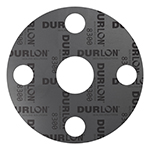
Durlon® 8300
High-pressure and high-temperature industrial steam
Durlon® 8300 is identified for demanding industrial steam service where higher temperature and pressure capability are required.
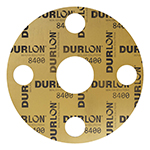
Durlon® 8400
Mild caustics, acids, and a broad pH range
Durlon® 8400 provides an option where steam systems may also involve chemical exposure across a broad pH range.
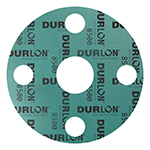
Durlon® 8500
Utility steam and general process steam
Recommended for chilled-water and glycol loop flanges, treated water systems, coolant and jacket-water flanges, standard diesel fuel system connections, general facility piping, compressed air, utility headers, pumps, valves, strainers, and non-aggressive drainage.
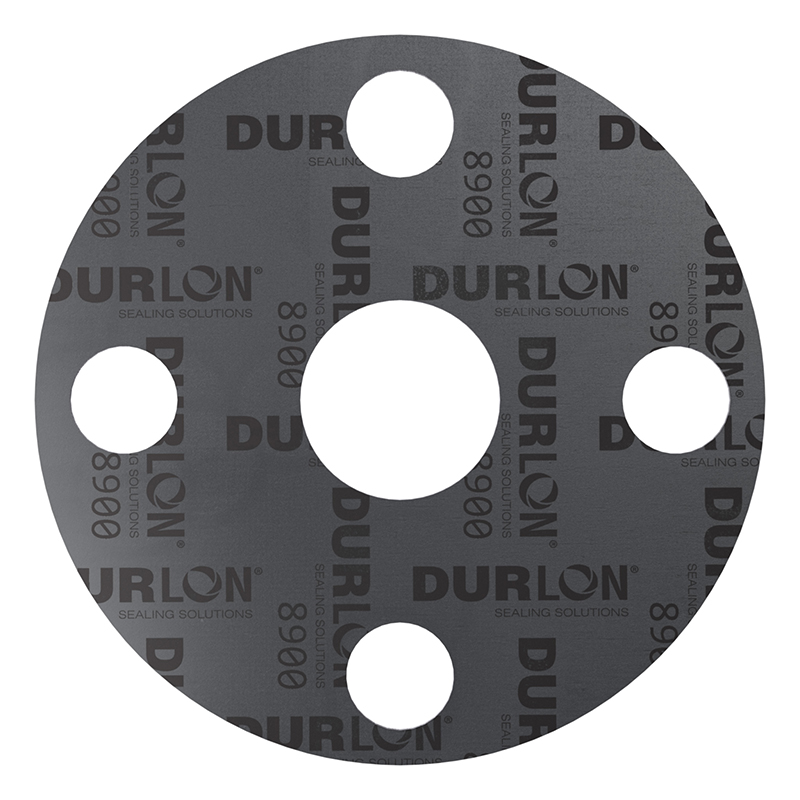
Durlon® 8900
Saturated and superheated steam
Durlon® 8900 is recommended for saturated and superheated steam service.
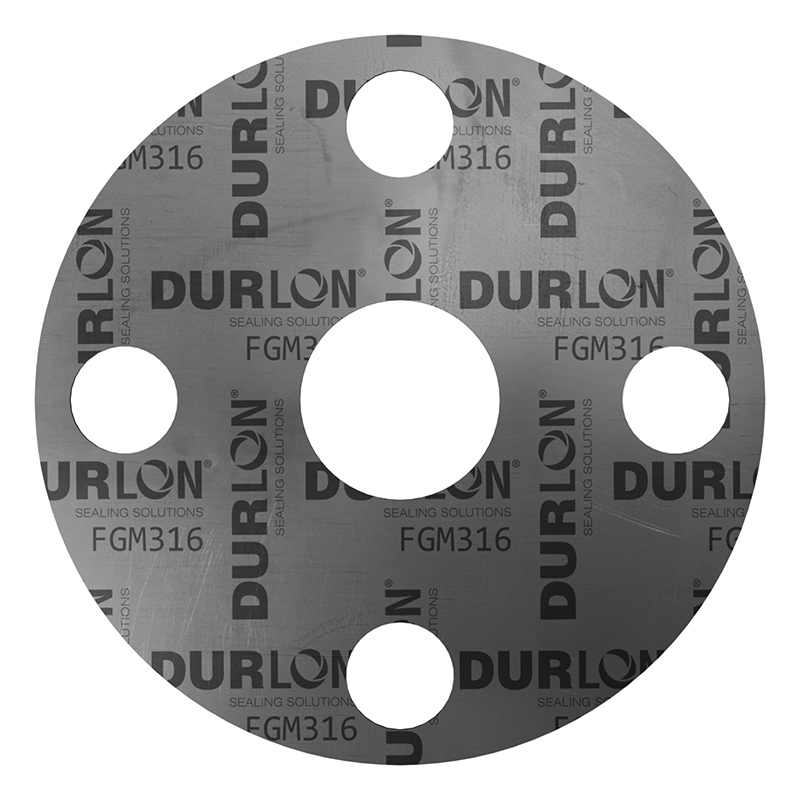
Durlon® FGM316
Superheated steam and high mechanical loads
FGM316 is a flexible graphite sheet construction laminated with multiple layers of 316 stainless steel foil, providing additional rigidity and burst resistance for applications involving high mechanical stress or pressure.
Durlon® CFG
Thermal cycling, pressure fluctuations, and lower bolt loads
Durlon® CFG is recommended where steam joints experience thermal cycling, changing pressure, or reduced available bolt load..
Durlon® DRI-ETG SWG
Steam piping, boilers, and high-pressure flanged joints
Durlon® DRI-ETG SWG is recommended for demanding steam piping, boiler connections, and high-pressure flanged joints.
Durlon® ETG incorporates inner and outer protection boundaries using Durlon® HT1000® mica-phyllosilicate sealing material to support extreme-temperature sealing performance.
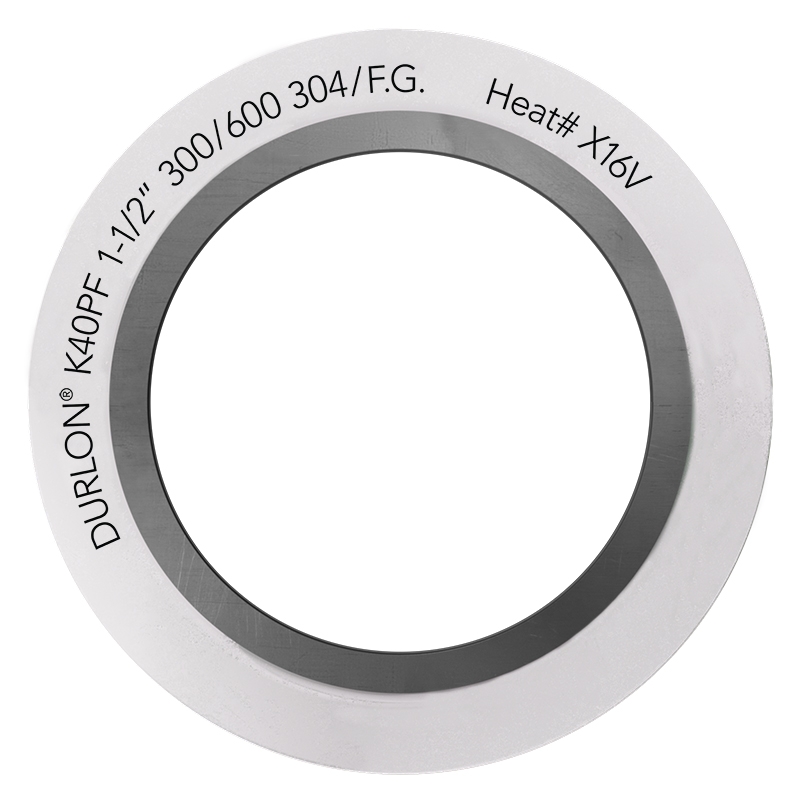
Durlon® Kammprofile
Heat exchangers, pressure vessels, and cyclic steam equipment
Durlon® Kammprofile gaskets are recommended for equipment involving high loads, pressure containment, and cyclic steam conditions.
Maximum temperature capability depends on the materials used in the Kammprofile construction.
Tested and Certified Sealing Solutions
Depending on the selected gasket style, Durlon steam-service products include constructions with API fire-test qualifications, regulatory declarations, and other product certifications.
The Steam Applications guide identifies certifications including API 6FB, API 607, California Proposition 65, RoHS/REACH declarations, FDA requirements for selected products, and ABS PDA for Durlon® 8500.
Reliability Through Changing Steam Conditions
Steam-system reliability depends on more than piping performance. Effective sealing helps support system efficiency, equipment integrity, operational safety, and long-term reliability as temperatures, pressures, and thermal cycles change.
The core of the Durlon® brand is to provide fluid sealing solutions that make sense; financially and strategically, through process-oriented design, sector-specific knowledge, and extensive testing.
Whether the application involves utility steam, saturated steam, superheated steam, condensate return, or high-pressure steam equipment, Durlon offers gasket technologies designed to address the operating demands of industrial steam systems.
Contact Durlon today to discuss your steam sealing application.