
January 23, 2026
In critical process environments, sealing integrity determines whether a plant operates safely and efficiently. A single compromised seal can trigger a cascade of problems, including product contamination, fugitive emissions, unplanned shutdowns, and safety incidents.
Understanding industrial sealing fundamentals is crucial for anyone responsible for ensuring equipment reliability, process safety, or maintenance planning in refineries, chemical plants, power generation facilities, and other heavy industrial operations.
This guide covers the core principles that govern sealing performance in industrial environments. We examine the key interfaces where leaks occur, material behaviors that determine seal longevity, flange conditions that control sealing success, and root causes that lead to gasket failure. We also address installation practices that prevent expensive rework and provide a practical framework for selecting sealing solutions based on service type.
Defining Industrial Sealing in Critical Process Environments
Industrial sealing refers to the containment of fluids, gases, and vapors within pressurized systems. In critical process environments, sealing systems must maintain integrity while exposed to extreme temperatures, corrosive chemicals, pressure cycling, and mechanical stresses.Critical processes include applications where seal failure creates immediate safety hazards or production disruptions. These environments are found in petroleum refining, petrochemical production, power generation, and other industries handling hazardous or high-value fluids.
Industrial sealing systems operate within defined parameters established by pressure class ratings, temperature limits, and chemical compatibility requirements. ASME B16.5 flange standards and API 622 fugitive emissions protocols govern how these systems are designed and maintained.
The primary sealing mechanism in bolted flange connections relies on compressive force applied through bolt load, which creates contact between the gasket surface and the flange faces.
Understanding the Main Sealing Interfaces in Process Plants
Process plants contain thousands of potential leak points, but the majority of sealing challenges occur at predictable interfaces where components connect.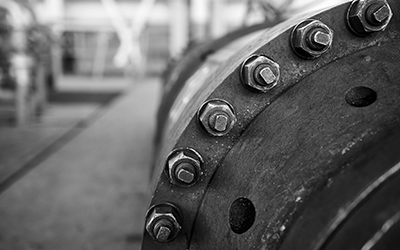
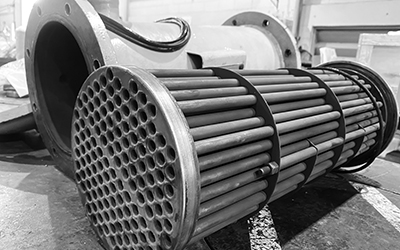
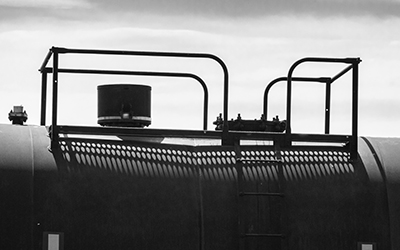
Each interface type presents unique loading conditions, thermal environments, and failure mechanisms that influence gasket material selection.
Learning What Makes a Seal Hold Under Pressure and Temperature
Sealing performance depends on maintaining sufficient contact stress between the gasket and flange surfaces. This contact stress must exceed the internal fluid pressure while remaining below the material’s yield strength.- Contact stress distribution across the gasket surface is rarely uniform. Bolt hole spacing and gasket compression characteristics create stress concentrations near bolt holes and reduce stress between bolts.
- Initial gasket stress is established during installation when bolts are tightened. However, the seal must maintain integrity using residual stress after internal pressure loads the joint.
- Temperature effects significantly impact sealing performance. Thermal expansion can increase bolt load, but differential expansion often reduces net gasket stress. Elevated temperatures cause gasket materials to soften. Temperature cycling progressively relaxes bolt load.
Understanding these mechanical relationships explains why gasket material selection can’t be based solely on chemical compatibility.
Understanding Gasket Material Behavior in Real Operating Conditions
Gasket materials respond to operating conditions through several time-dependent mechanisms.- Creep relaxation is the progressive loss of gasket thickness and contact stress under sustained load. All materials exhibit some creep, but rates vary dramatically. Compressed fiber gaskets may lose 30-40% of initial stress within days, while expanded PTFE and flexible graphite materials maintain 80-90% over months or years.
- Recovery properties measure a gasket’s ability to maintain contact with flange surfaces as the joint experiences thermal cycling. Materials with good recovery can expand slightly to maintain contact during contraction phases. Materials with poor recovery lose contact, allowing leakage when the system restarts.
- Chemical attack degrades gasket materials through several mechanisms, depending on the process fluid. Oxidizing acids attack carbon-based materials, solvents swell elastomers, and alkalis degrade synthetic fibers. Chemical compatibility charts provide general guidance, but concentration, temperature, and exposure time all influence degradation rates.
- Thermal degradation occurs when gasket materials exceed their rated temperature limits. Fiber-based materials char and lose strength, elastomers harden and crack, and even graphite-based materials can oxidize at elevated temperatures. The effect is cumulative.
Real operating conditions combine these mechanisms simultaneously. A gasket experiencing high temperature, corrosive chemicals, and pressure cycling must resist all three degradation modes throughout its service life.
Exploring Flange Conditions That Control Sealing Success
Even the best gasket materials cannot compensate for poor flange conditions. The flange faces provide the rigid surfaces that contain and compress the gasket, and defects in these surfaces create leak paths or stress concentrations.- Surface finish directly affects gasket seating and sealing performance. ASME B16.5 specifies finish requirements between 125-250 microinches Ra for most gasket types. Surfaces that are too smooth prevent the gasket from gripping, while rough surfaces create deep valleys that the gasket can’t fill.
- Flatness and parallelism determine whether the gasket experiences uniform compression. Warped flanges create areas of high stress near contact points and low stress in gaps. Flange faces should be flat within 0.002 inches per inch of diameter.
- Corrosion and pitting on flange faces create irregular surfaces that no gasket can effectively seal. Even shallow pits allow fluid to bypass the gasket’s sealing surfaces. Flange faces in corrosive services require periodic inspection and reconditioning.
- Flange alignment affects load distribution and gasket performance. When bolt holes don’t align properly, installers must pull flanges together with the bolts, creating uneven stress patterns. Proper alignment means the flanges mate naturally before any bolt load is applied.
- Flange stiffness and design influence how bolt loads transfer to the gasket. Thin or flexible flanges deflect under bolt load, reducing stress in the gasket’s inner regions. Higher-pressure class flanges are thicker and stiffer, providing more uniform stress distribution.
Successful gasket sealing requires attention to flange conditions as much as gasket selection.
Identifying the Most Common Root Causes of Leakage
Understanding gasket failure causes enables targeted corrective actions. Most leakage results from a limited set of root causes.- Insufficient bolt load is the single most common cause of gasket leakage. When bolts are not tightened to the required torque, the gasket never achieves the contact stress needed to seal. This occurs when installers use impact wrenches without verifying the final torque or estimating torque by feel.
- Improper tightening sequence creates uneven gasket compression even when the overall bolt load is correct. The standard star pattern progressively tightens bolts across the flange diameter, allowing the gasket to compress evenly. Tightening consecutive bolts around the circumference pushes gasket material to one side.
- Gasket material incompatibility with process fluids or temperatures causes chemical attack or thermal degradation that destroys sealing surfaces. This occurs when gasket specifications are carried over from one service to another without verifying compatibility.
- Thermal cycling stress causes bolt load relaxation and gasket creep that progressively reduce contact stress. Systems that operate at elevated temperatures and undergo frequent startup/shutdown cycles experience accelerated relaxation.
- Flange surface defects, including corrosion, scratches, and gouges, create leak paths that the gasket can’t fill. Flange faces should be inspected before each gasket installation and reconditioned if surface defects are present.
- Excessive piping stress loads the flange connection with bending moments from thermal expansion, vibration, or improper pipe support. These external loads distort the flange, reducing gasket compression on one side.
Root cause analysis should examine these factors systematically rather than simply replacing failed gaskets with different materials.
Understanding Installation Practices That Prevent Rework and Downtime
Proper installation practices determine whether industrial gaskets achieve their designed performance or fail prematurely due to installation errors.- Flange preparation begins with thorough cleaning of both flange faces to remove old gasket material, corrosion products, and any contaminants. Flange faces should be scraped clean with non-metallic tools and then wiped with solvent to remove oils and residues.
- Gasket positioning and centering ensure the gasket aligns properly with the flange bore and bolt holes before any load is applied. The gasket should rest flat against the flange face without twisting. Proper positioning is particularly critical for large-diameter flanges.
- Bolt lubrication affects the relationship between applied torque and actual bolt tension. Friction between bolt threads, nuts, and flange surfaces consumes 85-90% of applied torque in dry conditions. Lubricating threads and bearing surfaces reduces this friction.
- Tightening sequence and technique control stress distribution across the gasket. The standard cross-pattern or star-pattern sequence tightens opposing bolts alternately, compressing the gasket gradually and evenly. Multi-pass tightening applies 30% of the target torque on the first pass, 60% on the second pass, and full 100% torque on the final pass.
- Torque verification ensures all bolts achieve the target value. Electronic torque wrenches provide real-time readings and can be calibrated regularly. Hydraulic tensioners apply load directly, providing more consistent bolt loading.
Installation quality has at least as much impact on sealing performance as material selection.
Learning a Practical Method for Selecting Sealing Solutions by Service Type
Gasket material selection requires matching material properties to specific service conditions.- The temperature range establishes the initial material screening. Each gasket material has defined upper and lower temperature limits. Compressed fiber gaskets typically operate from -100°F to 450°F; expanded PTFE from -400°F to 500°F; flexible graphite from -400°F to 850°F; and specialized high-temperature materials to 1500°F or higher.
- Pressure rating determines the gasket’s structural requirements. Low-pressure services below 150 psi can use softer, more conformable materials. Medium-pressure services from 150 to 600 psi require materials with better creep resistance. High-pressure services above 600 psi typically require semi-metallic or metallic gaskets.
- Chemical compatibility eliminates materials that will degrade in contact with process fluids. Strong oxidizing acids attack carbon-based materials. Organic solvents swell elastomers. Strong alkalis degrade aramid fibers. Always verify compatibility at the actual service concentration and temperature.
Service type classification groups similar operating conditions:
- Steam service requires materials that withstand high temperature and cycling. Flexible graphite with tanged metal inserts performs well in high-pressure steam.
- Hydrocarbon service in refineries needs materials resistant to oils and solvents. Flexible graphite and filled PTFE handle most hydrocarbon applications.
- Corrosive chemical service demands excellent chemical resistance, often requiring expanded PTFE.
- High-purity applications in pharmaceutical and semiconductor manufacturing require materials that won’t contaminate the process stream.
Cycling frequency influences the required recovery properties. Continuous operation allows the use of materials with moderate recovery. Applications with daily or more frequent cycles require materials with excellent recovery.
Durlon provides comprehensive sealing solutions across these service categories. Our sealing products portfolio includes materials engineered for specific industrial applications.
Building Long-Term Sealing Reliability
Successful industrial sealing programs combine proper material selection, quality installation, and systematic maintenance practices.- Accurate service condition documentation for each flanged connection provides the foundation for informed gasket selection, rather than relying on whatever materials happen to be in stock.
- Proper installation and quality control remove most common gasket failure issues and quickly reduce leak rates.
- Preventive maintenance programs identify degrading gaskets before they fail. Thermal imaging can detect temperature anomalies indicating developing leaks. Ultrasonic inspection finds leaks too small to see or hear. Early detection allows planned repairs during convenient maintenance windows.
- Failure analysis of removed gaskets reveals whether problems stem from installation, materials, or operating conditions.
This feedback loop continuously improves material specifications and installation practices.
Understanding these fundamentals provides the foundation for building reliable sealing systems that protect your operations, personnel, and environment.
For technical support with gasket material selection or installation challenges in your facility, contact our team to discuss your specific sealing requirements.