
In this new format, we are putting education at the forefront. Whether you work in engineering, maintenance, or operations, each issue will deliver deeper technical content, industry best practices, and solutions you can apply immediately in the field.
We are excited to bring you along as we evolve Between The Pipes into a more valuable resource that is built to inform, support, and strengthen your expertise.
Warm regards,
Sylvia Flegg, Global Marketing Manager
Rhea Lisondra, Digital Marketing Coordinator
Is It Really “Gasket Failure”?
When a bolted flange joint leaks, the instinct is often to blame the gasket. However, modern research shows that leakage is usually the result of system level factors within the bolted flange joint assembly. The bolted flange joint assembly (BFJA) is a system made up of multiple interdependent components: the gasket, the flanges, the fasteners, lubrication, and installation practices. Calling every joint leak a “gasket failure” is looking only at the tip of the iceberg, because the performance of the joint depends on the interaction of all the components that make up the assembly.
• “Failure analyses show up to 85% of all gasket failures are due to faulty user installation.” — Pumps&Systems: Prevent Faulty Installation of Bolted Flange Connections, April 2020
• A 2024 review on corrosion failures in flanged gasketed joints identifies corrosion of flange faces and joint components as a key leakage mechanism. — ScienceDirect: Corrosion failures of flanged gasketed joints: A review, Jun 2024
• Research on bolted flange assembly shows that external loads and misalignment can lead to flange separation or excessive gasket compression, both of which cause leakage. — Cornell University: Efficient assembly of bolted joints using numerical FEM, Nov 2024
The Bolted Flange Joint Assembly
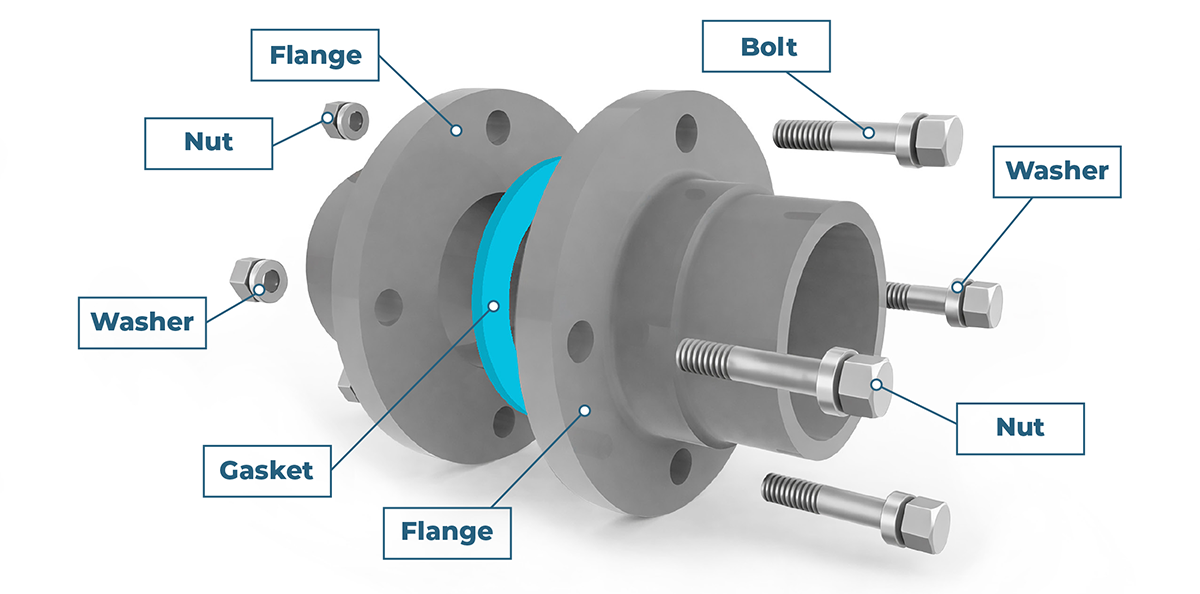
- Installation issues
- Gasket performance
- Fastener integrity
- Flange condition
Learn more by downloading this guide which addresses each.
Joint Failure Prevention Guide
Selecting the right sealing material is critical. Our comprehensive Gasket Manual provides in-depth guidance on choosing the correct material for your application, helping reduce the risk of premature failure.
Installation-Related Failures
A gasket must be compressed adequately and uniformly to deliver long term, leak free performance. Research shows that most gaskets in service that leak are under compressed. Achieving the correct level of compression is the most controllable factor in joint reliability because the compression should be neither excessive nor insufficient and should be distributed evenly.
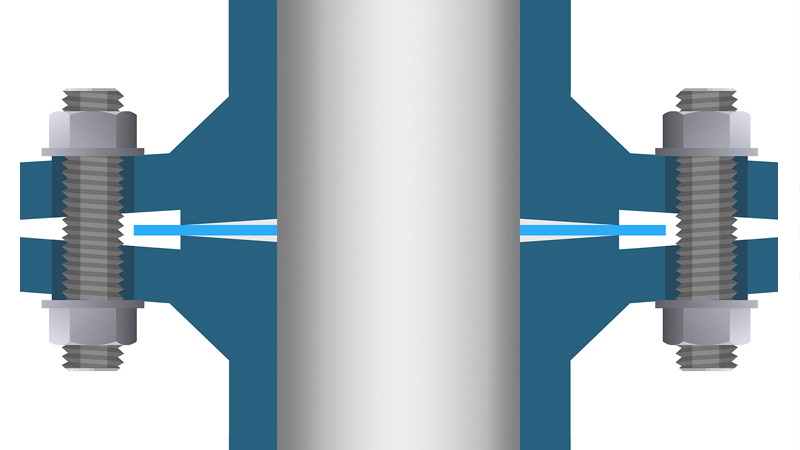
Over-Compression in gaskets is indicated by visible damage that varies by type, such as extrusion or splitting in soft gaskets and inward buckling or guide ring imprints in metallic gaskets. It is typically caused by excessive compressive stress, often in higher pressure flanges or with overly smooth flange surfaces and surface treatments. To prevent this, installation should follow ASME PCC-1 guidelines with proper torque based on gasket material and flange finishes between 125 and 250 RMS. If issues persist, Semi-Metallic Gaskets or Spiral Wound Gaskets with inner rings can improve performance.
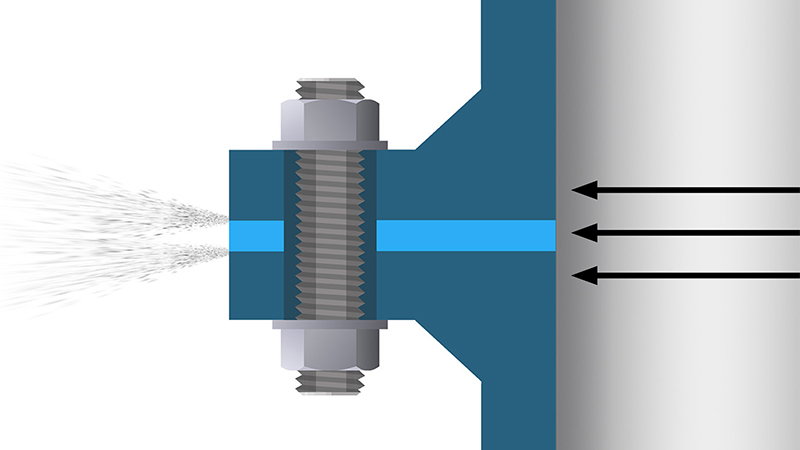
Under-Compression can be identified by visible signs such as soft gaskets showing extrusion, splitting, or irregular shapes, and metallic gaskets like spiral wound types displaying inward buckling or guide ring imprints. These issues are typically caused by poor bolting practices, insufficient torque, weakened or corroded bolts, lack of lubrication, pipe strain, or flange misalignment. To address under-compression, proper installation procedures should be followed, a thinner gasket can be used to achieve adequate seating stress, bolts should be inspected before use, and any flange misalignment should be corrected, with expansion joints added if necessary.
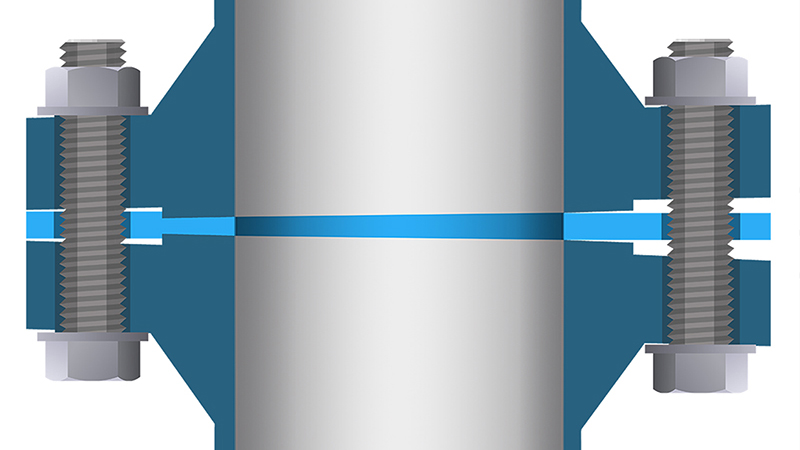
Uneven Compression or Blowout is indicated by differences in gasket thickness, uneven flange impressions, and localized stress cracks. These issues are commonly caused by uneven bolt loading or excessive gasket thickness relative to available bolt load. To remedy this, follow a proper multi-pass tightening procedure and use gap tools to ensure even compression. Decreasing gasket contact area and using thinner gaskets can improve load distribution, and gaskets should never be reused.
Gasket-Related Failures
Gasket failures can occur when the wrong material is selected for the operating conditions, especially under cyclic temperature and pressure changes that cause fatigue, loss of compression, and leakage. Failures may also result from chemical attack when all gasket components are not compatible with the process media, particularly at Higher Temperatures where reactions accelerate, as well as from fastener issues such as improper preload, vibration loosening, fatigue, or incorrect selection and handling.

Wrong Product/Cyclic Conditions Even when a gasket is installed correctly, selecting the wrong type for the specific service conditions will eventually lead to failure because each gasket material is designed to operate within certain temperature, pressure, and chemical limits. When used outside these limits, the gasket may degrade, lose elasticity, or become mechanically unstable. This issue is intensified in cyclic conditions where repeated changes in temperature and pressure cause expansion and contraction, leading to a loss of compression, material fatigue, and eventual leakage.
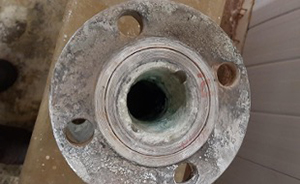
Chemical Attack Chemical compatibility is not simply a binary pass or fail check based only on the primary gasket material. Compatibility must be verified for every component of the gasket, including binders, fillers, and facing materials, against each constituent of the process media. In addition, the rate of chemical reactions increases as temperature rises, meaning that a material that may be marginally acceptable at ambient conditions can fail quickly when exposed to elevated process temperatures.
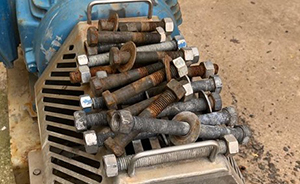
Fastener-Related Failures Fastener related failures are often overlooked even though fasteners are the primary load generating elements in a joint. Issues arise from insufficient preload, self loosening due to vibration, tensile overload during installation, and fatigue from cyclic loading. Additional problems include galling and thread stripping, as well as using fasteners that are incompatible with service temperature, which reduces strength and load retention. Improper storage can cause corrosion or embrittlement, while mixing bolt grades or using incorrect sizes leads to uneven loading and poor alignment. Most of these failures ultimately stem from human error in selection, handling, or installation.
Flange-Related Failures
Gasket-related failures can occur when flange surfaces are damaged, uneven, or misaligned, preventing proper seating and uniform compression of the gasket and leading to leakage. Failures also arise when incompatible gasket and flange types are used, which can result in deformation, loss of support, and compromised sealing performance.
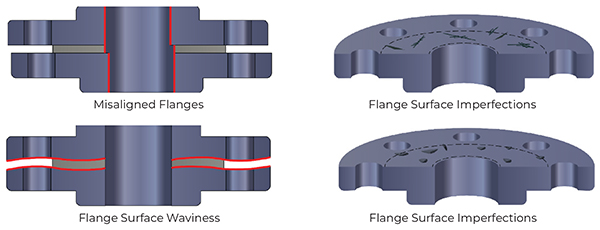
Flange Surface Issues Flange related failures occur when the flange face is not suitable for proper gasket seating and sealing. Surface imperfections such as pitting, gouges, or scratches can create leak paths, while waviness can prevent consistent gasket contact. Lack of flatness across the flange face can concentrate stress in some areas and leave others under compressed, reducing sealing performance. Misaligned flanges create a non parallel gap that makes uniform bolt loading and gasket compression difficult. To prevent these issues, flange faces should be inspected, cleaned, and measured before installation in accordance with ASME PCC-1 acceptance criteria.
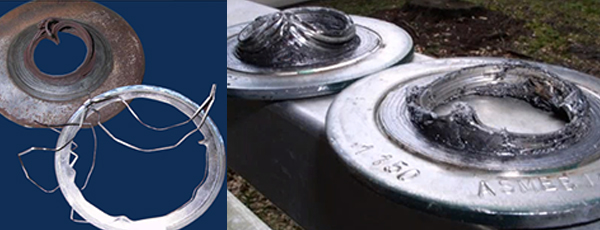
Gasket-Flange Incompatibility Gasket flange incompatibility occurs when a gasket is used with a flange design it is not intended for, compromising sealing performance. A common example is using spiral wound gaskets in slip on flanges, where the reduced raised face area and pipe bore intrusion can cause the gasket to extend into the flow stream. This can lead to loss of inner ring support, deformation of the gasket, and flow disruption or contamination. Compatibility should be verified in accordance with standards such as ASME B16.20 to ensure proper performance.

Most Bolted Flange Joint Assembly (BFJA) failures are preventable. By focusing on Proper Installation, correct Gasket Material Selection, correct size and proper storage of fasteners, and flange surface awareness, you can significantly improve reliability and reduce downtime.
Quick Prevention Checklist
- Select correct gasket material (media, temperature, pressure, cyclic conditions)
- Fully verify chemical compatibility for all gasket components and all media elements
- Verify flange surface finish, flatness, and alignment before installation
- Confirm correct gasket type for the specific flange style
- Verify fasteners are inspected, correctly sized, graded for service temperature, and properly stored
- Confirm proper torque is applied in staged, cross-pattern sequence using calibrated tools
- Follow ASME PCC-1 installation guidelines
- Never reuse gaskets
Talk to a Sealing Expert
If you’re experiencing joint reliability issues or want to improve system performance, our team is here to help. Contact a Durlon Sealing Specialist or Request a Quote to find the right solution for your application.
Tune in for our next issue as we cover the topic: “2026 Sealing Industry Outlook: What Engineers Need to Know”. Don’t forget to update your Durlon Resources and enjoy for our monthly Blogs. See you in June!